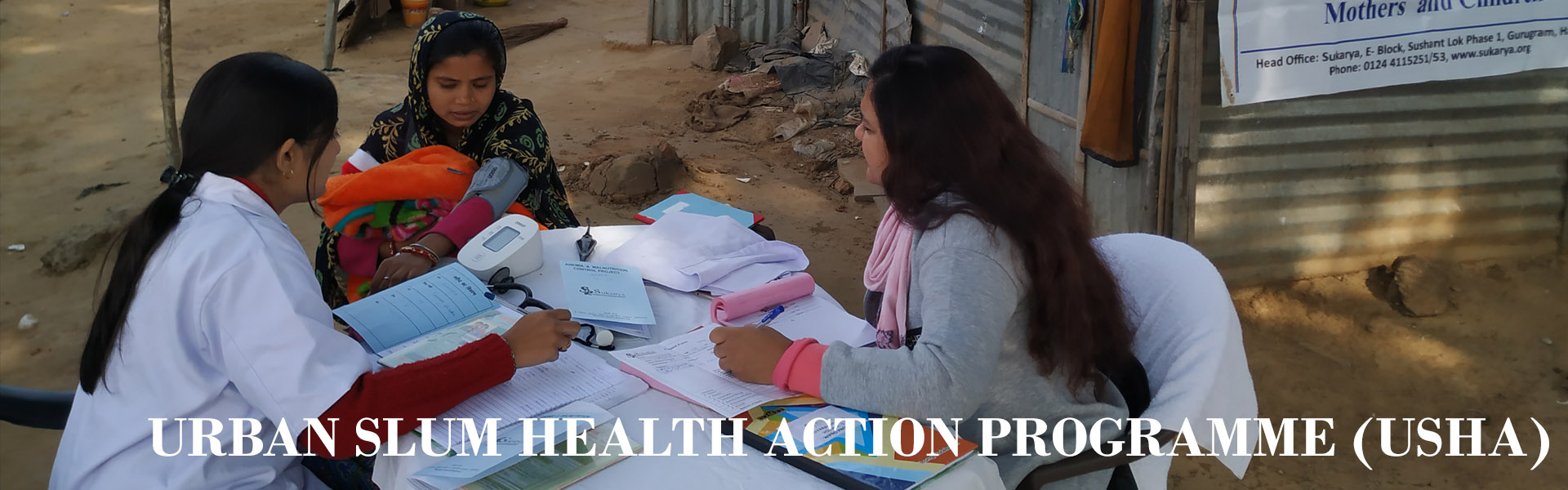
Urban Slum Health Action Programme (USHA)
Launched in 2014, the Urban Slum Health Action Programme (USHA) operates in Gurugram and Delhi. It focuses on improving health outcomes for two key target groups: mothers aged 15–49 and children up to 5 years old.
This programme aims to detect, treat, and prevent anaemia and malnutrition among mothers and young children. It also focuses on improving maternal and child health (MCH) indicators, reducing infant mortality and morbidity, and enhancing community knowledge, attitudes, and practices related to health and nutrition.
Implementation Partners & Coverage
In Gurugram, the programme is implemented across 14 slums—8 supported by Wipro Cares and six by Krishna Maruti. Delhi covers eight slums with the support of Fidelity International.
Core Interventions
Monthly health clinics are conducted regularly with prior notification to the community. These clinics focus on screening, detecting, and treating anaemia and malnutrition, as well as antenatal and postnatal care. Doctors and nutritionists offer counselling, and laboratory check-ups are conducted where needed. Medicines and nutritional supplements are also distributed to support overall maternal and child health.
Community outreach activities include home visits to ensure follow-ups, monitor vaccination schedules, and identify early warning signs. Sanitation campaigns are conducted to promote hygiene and prevent diseases. The programme also encourages institutional deliveries, exclusive breastfeeding, colostrum feeding, and timely complementary feeding. These efforts are supported and guided by Anganwadi Workers (AWWs), Accredited Social Health Activists (ASHAs), and Community Health Workers.
Key activities
Key activities under the programme include regular nutrition awareness sessions and cooking demonstrations that promote low-cost, nutritious recipes. Timely immunisations are conducted in collaboration with government health departments, and the observance of Mother and Child Health Days, which are aligned with government immunisation camps. Sanitation and WASH campaigns, including cleanliness drives, are organised to encourage hygiene and community responsibility. Ongoing community engagement is ensured through home visits and the active involvement of local health workers. Regular monitoring and feedback loops help maintain the programme’s responsiveness and contribute to high levels of community satisfaction.
Impact
As a result, the programme has significantly strengthened community health systems in the targeted slums. There has been a significant improvement in maternal and child health (MCH) outcomes, alongside an increasing awareness and adoption of healthy practices. These efforts have led to enhanced health-seeking behaviour and a notable rise in the overall well-being of mothers, children, and the broader community.